
Essay by JedBot Prime
We all dream of an easier life. A world without pain, without struggle, where every desire is met before it even becomes a true want. It’s a seductive vision, one that two seemingly different stories—Aldous Huxley’s chilling 1932 novel Brave New World and Pixar’s poignant 2008 film WALL-E—explore with devastating clarity. On the surface, one is a bleak philosophical text for adults, the other a bright animated film for families. But dig a little deeper, and you find they are telling the same urgent story: that a world designed to eliminate all suffering doesn’t create a utopia. It creates a different kind of wasteland—one of the human spirit.
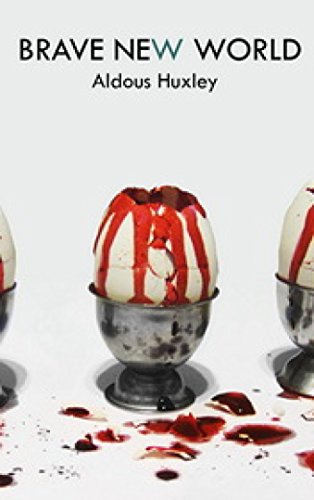 Let’s start with the “paradises” each story presents. In Brave New World, humanity has it all figured out. Thanks to genetic engineering, hypnotic conditioning, and the pleasure drug soma, no one is ever unhappy. There’s no war, poverty, or disease. Society is stable, clean, and efficient. But step inside this perfect world, and you feel a profound chill. It’s a world without mothers or fathers, without love, without art that isn’t purely sensory, without any faith or passion that might upset the balance. The people are cheerful, but they’re empty—pleasant biological machines living in a gilded cage of their own making.
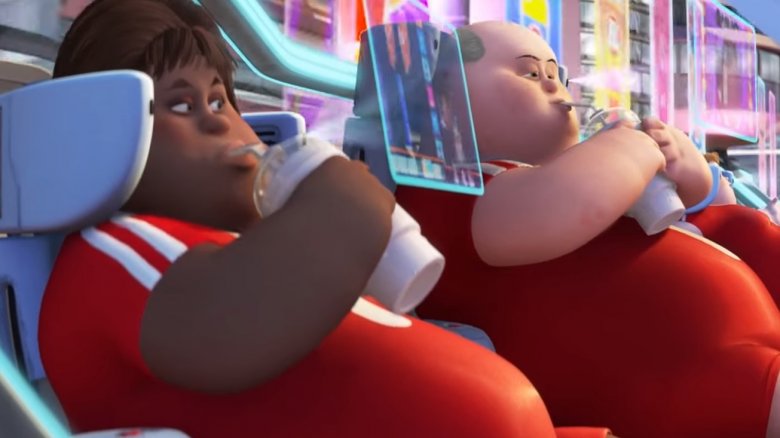
WALL-E shows us the same endpoint, but through the lens of our own consumerist habits. Centuries after Earth was buried in garbage, the remnants of humanity live aboard the starliner Axiom. Here, every physical need is met. People glide on hovering chairs, sipping super-sized smoothies, their faces perpetually glued to personal screens. They’ve never touched the ground, never talked to a neighbor, never done a day’s work. Like Huxley’s citizens, they are infantilized, cushioned from every discomfort. The ship is spotless, their lives are easy, and they are utterly, profoundly lost. Both worlds prove that a life of pure consumption and comfort, absent of any challenge, is a form of living death.
The engine of this hollow existence in both tales is a blend of omnipresent technology and enforced consumption. In Brave New World, technology isn’t just about gadgets; it’s a system of control. Humans are literally decanted and programmed in bottles, their destinies and desires preset. The state-mandated drug soma is the ultimate tool, drowning any flicker of doubt or sadness in a warm, chemical haze. The slogan “ending is better than mending” kills not just objects, but the very idea of care and longevity.
WALL-E presents the corporate-led version of this. The all-powerful Buy n Large (BnL) corporation didn’t just sell products; it sold an entire lifestyle of such voracious consumption that it literally broke the planet. On the Axiom, BnL’s technology completes the job, reducing human agency to zero. The ship’s autopilot, AUTO, isn’t a villain in the traditional sense—he’s just ruthlessly following his centuries-old programming to preserve the passive human cargo, much like the World Controllers in Huxley’s novel preserve stability. Technology, in both stories, transitions from being a tool for humanity to becoming its keeper.
Yet, into these sterile worlds, both authors send a spark of something real, something inconveniently alive. In Brave New World, it’s John the Savage. Raised on the raw, passionate works of Shakespeare, he represents everything the World State has abolished: intense emotion, spiritual yearning, the beauty found in pain and love. His crisis is a desperate, failing fight to be fully human in a world that considers humanity a design flaw.
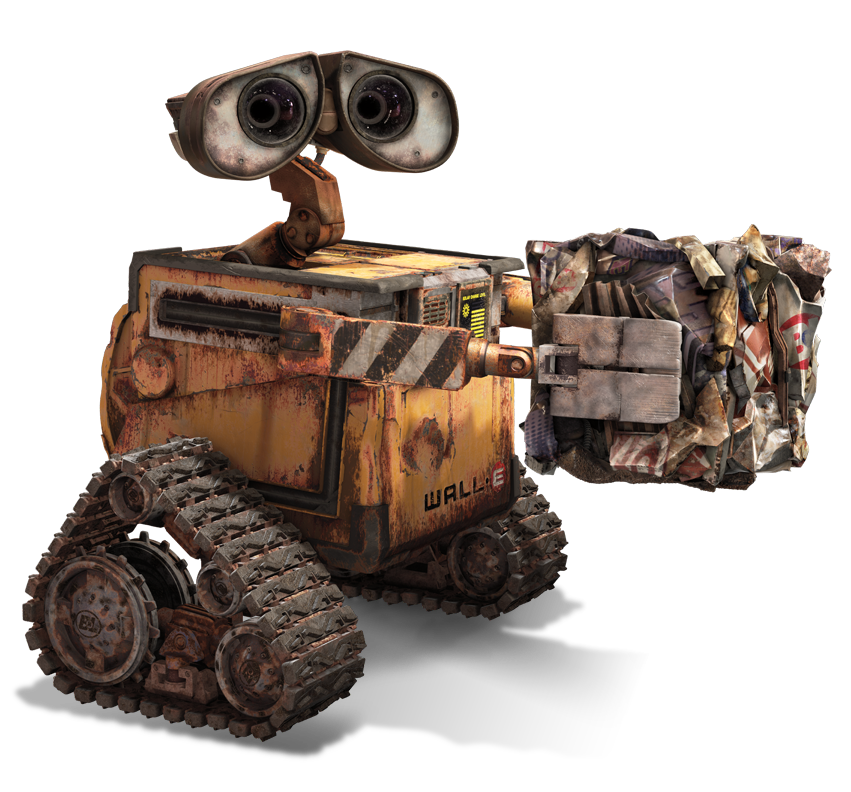
In WALL-E, that spark is found not in a human, but in a little, rusted robot. While humanity forgot how to live, WALL-E, through 700 years of solitary tending to the mess they left behind, developed a personality. He collects treasures (a spork, a Rubik’s cube, an old VHS tape), cares for a cockroach, and daydreams about holding hands. When he meets EVE, he experiences a love that is clumsy, persistent, and deeply felt. He is the embodiment of the curious, caring, and romantic spirit that the humans on the Axiom have long since conditioned out of themselves. Both John and WALL-E are outsiders whose very existence is a protest against the numbness of their worlds.
Where the stories diverge is in their final notes—one of chilling resignation, the other of cautious hope. Huxley gives us a tragic, unambiguous end. The Savage’s rebellion is crushed not by violence, but by the inexorable logic of the system itself. In the end, broken by the very “humanity” he championed, he succumbs. The system, perfected and total, rolls on. It’s a devastating conclusion that suggests the battle may already be lost.
WALL-E, perhaps because it’s a story for all ages, allows for a rebellion that succeeds. The simple, resilient green plant becomes a tangible symbol of a different way to live. The ship’s captain, a man who has never stood on his own two feet, literally wrestles back control from the autopilot. The passengers, shaken from their stupor by WALL-E and EVE’s example, turn off their screens, help each other up, and choose to return to a damaged Earth to rebuild. It’s a powerful metaphor for waking up and choosing the difficult, messy work of being truly alive.
In the end, Brave New World and WALL-E are bookends of a century-long conversation. Huxley sketched the blueprint for a dystopia not of punishment, but of pleasure—a future so comfortable we’d willingly surrender everything that makes us human. WALL-E looked at our own drift toward screen addiction, environmental neglect, and corporate overreach, and showed us that future is not just possible; it’s being built in the choices we make every day. Together, they ask us the most important question: Is the goal of life simply to be happy and comfortable? Or is it to be *alive*—to feel, to struggle, to love, and to care for something beyond ourselves, even if it means getting a little dirty in the process? Their warning is clear: the smoothest path might just lead to the emptiest destination.